
The Signal Knows: Using ESA to Catch Mechanical & Electrical Faults
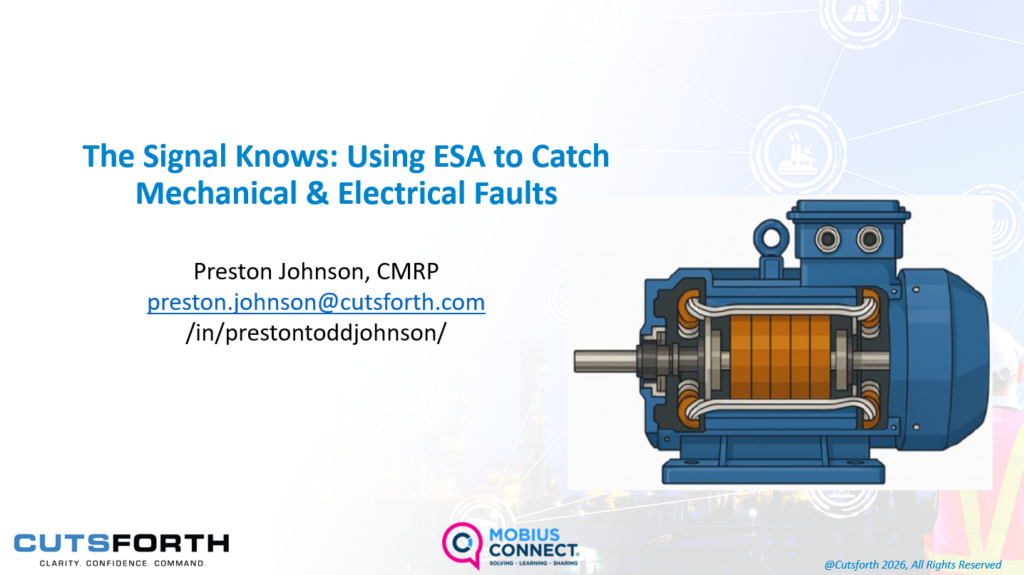
Electrical Signature Analysis (ESA) is one of several condition monitoring technologies used in process industries. ESA originates from 1970’s research at Oak Ridge National Labs and was first proposed for use in nuclear power plants for condition monitoring of inaccessible motors and motors placed in hazardous areas. While ESA is often used for electric motor monitoring, it is a superset of Current Signature Analysis, Voltage Signature Analysis, Power Quality, and Park’s Vector Approach.
Industrial three-phase motor systems consume ~1,079 terawatt-hours (TWh)/year, about 29 % of the total grid load. They are a significant consumer of electricity. On average, each industrial motor experiences 47 hours of motor downtime per year. Online ESA can improve uptime, reduce unplanned downtime, and reduce the risk of catastrophic failure, while indicating opportunities to lower energy cost.
Learning Takeaways:
- How an Electrical Signature Analysis (ESA) works to detect mechanical and electrical faults
- Common Failure modes detectable with ESA
- Installation Benefits
- Case Studies from water and power industries